

Table of Contents
- Why Cheap Chair Leg Protectors Keep Failing
- How to Measure Chair Legs for Protectors
- Felt Chair Leg Protectors: When They Work and When They Don't
- Chair Leg Socks: The Budget Option Worth Knowing About
- How to Install Chair Leg Protectors So They Stay Put
- Silicone vs Felt vs Screw-In: Which Chair Leg Protectors Suit Your Floor?
- Conclusion: Choosing Protectors That Outlast the Cheap Stuff
- Frequently Asked Questions
Last Updated: October 13, 2026
Why Cheap Chair Leg Protectors Keep Failing
Most chair leg protectors fail for a boring reason: they were never designed to stay attached. Felt stickers rely on adhesive, and adhesive gives up. Dust, hair and grit work their way under the pad, the glue softens with floor cleaning, and within weeks you are scraping a sticky residue off your timber.
At Chair Tips, we have spent over 20 years watching this exact cycle repeat. Homeowners buy a cheap pack, stick them on, and replace the whole set every few months.

The failure modes are predictable:
- Adhesive breakdown leaves gummy residue that is harder to remove than the original scratch
- Felt compression flattens the pad until the plastic base contacts the floor
- Wrong sizing lets the protector slide off the moment the chair is dragged
- Hard plastic caps with no felt or silicone layer simply transfer the scratch to the floor
The fix is not a better sticker. It is a different attachment method entirely.
How to Measure Chair Legs for Protectors
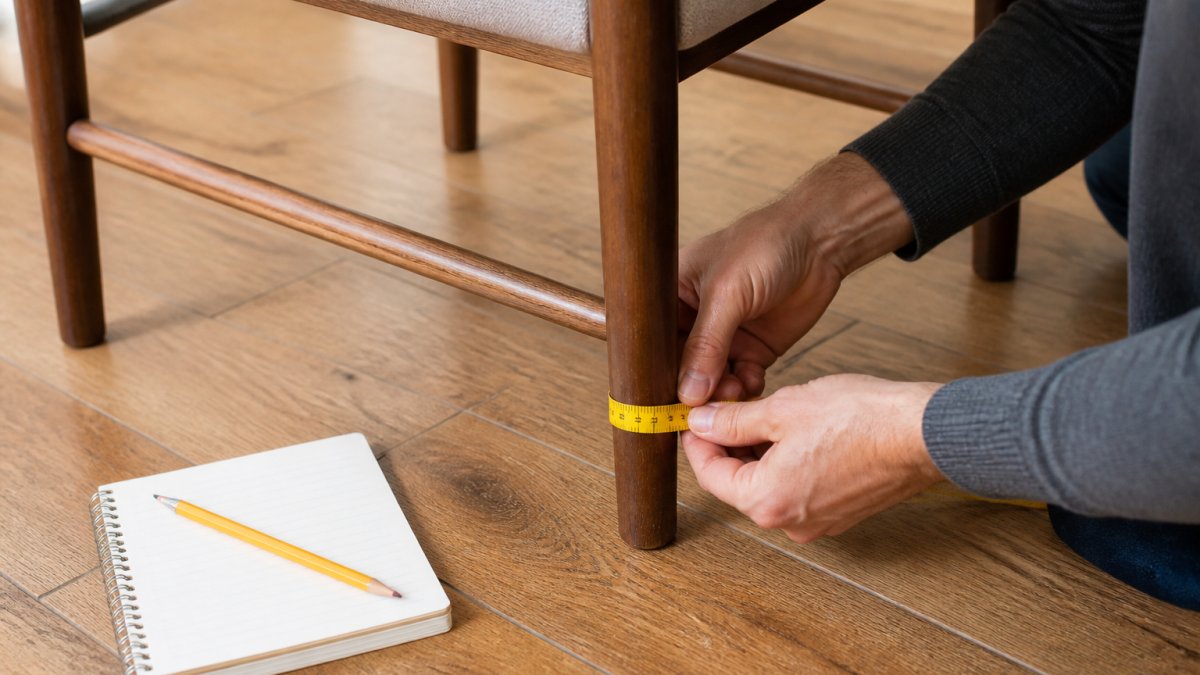
Measuring chair legs for protectors means recording the width of the leg at the very bottom, where the protector will sit. Measure both front and back legs, because splayed or tapered legs are often different sizes.
You need:
- A tape measure or ruler
- A pencil and paper to record each leg
- The chair upside down on a stable surface
Measure across the widest point of the base, not the middle of the leg. A tapered leg that looks uniform from the side can narrow by several millimetres between the seat and the floor.
Measuring Round, Square and Splayed Legs
Round legs need a single diameter measurement. Take it twice to confirm, since an oval leg will give two different readings.
Square and rectangular legs need width and depth. Note both numbers; a 25mm x 30mm leg will not accept a 25mm round cap.
Splayed legs are the ones that catch people out. If the leg sits at an angle, an internal cap may not seat properly. External protectors that grip the outside of the leg handle angled furniture far better than push-in caps.
Felt Chair Leg Protectors: When They Work and When They Don't
Felt chair leg protectors work well on smooth hard floors when the chair is lifted rather than dragged. They fail on carpet and on any chair that gets shoved sideways.

The reason is friction. Felt is designed to slide, which is exactly what you want on timber and tile. On carpet, the felt catches in the pile and peels away from the adhesive backing.
A common mistake is buying felt pads for dining chairs that get pulled out and pushed in daily. That sideways motion is what kills them.
Where felt genuinely earns its place:
- Light chairs on timber or tile that are lifted into position
- Furniture that rarely moves, like a side table or a display cabinet
- Low-traffic rooms
Where it does not:
- Carpeted rooms
- Heavy daily use
- Chairs dragged rather than lifted
For those situations, a felt and silicone combination holds up far better. Our Groovy Felt Chair Glides pair a stretchy silicone body with a felt base, so the grip comes from the silicone while the felt does the gliding.
Chair Leg Socks: The Budget Option Worth Knowing About
Chair leg socks are knitted or fabric covers that slip over the bottom of a chair leg. They are cheap, quiet and kind to floors, but they are a short-term answer.
Socks work best on stools and light chairs in rentals, where the goal is preventing scratches until the tenancy ends. They muffle noise well, which makes them popular in apartments with hard floors and neighbours below.
Extra Durable Silicone Chair Tips | Commercial Grade →
The trade-offs are real:
- They collect dust and pet hair
- They wear through at the base within months
- They slide down legs that taper
- They look tired quickly
If you want a cheap stopgap, socks are fine. If you want something you fit once and forget, look at silicone or screw-in options instead.
How to Install Chair Leg Protectors So They Stay Put
Installing chair leg protectors properly takes about two minutes per chair. The steps are simple, but skipping the cleaning stage is why most protectors come loose.
- Remove the chair from the room or lay it on its side on a soft surface.
- Clean the leg base with a damp cloth and let it dry completely. Any grit or oil will weaken the bond.
- Check the fit by test-fitting the protector before committing. It should need firm pressure, not force.
- For push-on caps, work the cap over the leg base and twist slightly to seat it evenly.
- For screw-in glides, mark the centre of the leg base, drill a small pilot hole, then drive the glide in straight.
- For internal caps, press the tip into the hollow leg until it sits flush with the floor.
- Test the chair by sliding it a short distance. If it catches or wobbles, the fit is wrong.
Silicone vs Felt vs Screw-In: Which Chair Leg Protectors Suit Your Floor?
Silicone protectors suit most homes and commercial spaces because they grip the leg, resist moisture and last for years. Felt suits light use on smooth floors. Screw-in glides suit furniture that needs to slide easily and never come off.
Here is how the three types compare on the things that actually matter:
| Type | Best For | Floor Type | Durability | Attachment |
|---|---|---|---|---|
| Silicone caps | Daily-use chairs, outdoor furniture | Timber, tile, carpet | Very long | Push-on grip |
| Felt glides | Light chairs, occasional use | Timber, tile | Moderate | Adhesive or silicone combo |
| Screw-in glides | Heavy furniture, frequent sliding | Smooth hard floors | Very long | Screwed into leg |
Silicone wins on versatility. It handles outdoor use, resists UV and water, and does not care whether the floor is timber, tile or carpet. Our commercial-grade silicone chair tips are built for exactly this, and they are the option we recommend to hospitality venues and aged care facilities where chairs move constantly.
Felt still has a place. The felt screw-in chair leg protectors combine a felt base with a screw fixing, so you get the glide of felt without the adhesive failure.
For square legs, the square internal chair tips press into hollow legs and stay there.

Timber, Tile and Carpet: Matching the Protector to the Surface
Timber floors scratch from grit trapped under a hard base, so you want a soft contact layer. Silicone or felt both work.
Tile is more forgiving but noisy. Silicone caps cut the scrape sound noticeably, which is why they are popular in restaurants.
Carpet is the surface that rules out plain felt. The pile grabs the pad and pulls it off. Silicone or internal caps are the reliable choice here.
Conclusion: Choosing Protectors That Outlast the Cheap Stuff
The pattern is consistent: cheap adhesive pads fail, and they fail fast. The cost is not the few dollars you spend replacing them. It is the scratched floor underneath.
Matching the protector to your leg shape, leg size and floor type is what separates a set that lasts a season from one that lasts years. Measure properly, choose silicone or screw-in fittings for anything that moves daily, and clean the leg before you fit anything.
If you would rather fit once and move on, Chair Tips offers felt-infused silicone caps in multiple sizes, commercial-grade durability for high-traffic venues, and specialised designs for round, square and splayed legs. Get started with Chair Tips and protect your floors properly the first time.
Frequently Asked Questions
Are felt or rubber chair leg protectors better for timber floors?
It depends on how much the chair moves. Felt glides let chairs slide smoothly and quietly, which suits dining chairs pulled in and out daily. But plain felt stickers wear through and collect grit, which then scratches the floor. Silicone caps grip instead of slide, so they suit chairs that get lifted or shuffled. For timber, a hybrid like felt-infused silicone gives you glide plus a protective base that lasts far longer than a felt sticker alone.
How do I stop chair leg protectors from falling off?
Most protectors fall off because they were sized wrong or pushed onto a dirty leg. Measure the outside of the leg at its widest point, then match it to the cap size. Clean the leg foot with a damp cloth and let it dry completely. For push-on caps, a small drop of clear silicone adhesive inside the cap holds it firm without making it permanent. Screw-in glides avoid the problem entirely because the screw grips the timber.
Can chair leg protectors be used on round and square legs?
Yes, but you need the right shape. Round legs take round external caps or round internal tips. Square and rectangular legs need square internal tips or square-section glides, because a round cap on a square leg leaves gaps where grit gets in. Splayed or angled legs are the tricky ones: measure the foot at its widest point and pick a stretchy silicone cap rather than a rigid plastic one so it conforms to the angle.
How often should felt chair pads be replaced?
Standard felt stickers on daily-use dining chairs often need replacing every few months once the felt compresses and picks up grit. Felt-infused silicone glides and screw-in felt glides last considerably longer because the felt is bonded to a durable base rather than glued straight onto the leg. Check pads every few months by running a finger across the felt: if it feels flat, gritty or has worn through to the base, replace it before it starts marking the floor.